Weekly Checklist KDP Interior: Your Book Creation Toolkit Explained
When you decide to publish a book through Amazon's Kindle Direct Publishing (KDP), the journey from manuscript to physical copy can feel daunting. Between formatting requirements, technical specifications, and design hurdles, many aspiring authors find the interior layout process to be a major roadblock. This is where a specialized product like the Weekly Checklist KDP Interior becomes not just a convenience, but a strategic asset.
What Exactly Is a KDP Interior Digital File?
Imagine you've written your book. The words are perfect. But before it can be printed and sold on Amazon, every page needs to be formatted into a precise digital file that meets Amazon KDP's strict guidelines for print quality. A KDP interior is this ready-to-use file. It’s the complete inside of your book—all the pages, margins, chapter headings, and page numbers—designed and assembled correctly. The phrase "Print on Demand (POD) or Amazon Kindle Direct Publishing KDP" highlights its dual purpose: it's crafted specifically for the systems that produce physical books when a customer orders one, ensuring no element is out of place.
These digital files are, as described, designed with publishers in mind. This means they eliminate the guesswork. You aren’t starting from a blank page in a design program; you’re starting from a professionally structured template that has already solved the common technical problems. The core promise is that the heavy lifting of interior book design is already done for you, freeing you to focus on your content and marketing.
Breaking Down the "What's Included" List
Understanding each component of the Weekly Checklist KDP Interior package reveals why it’s a comprehensive solution. Let's look at what you actually receive.
- Editable AI File: This is an Adobe Illustrator source file. For designers or those with access to the software, this offers the highest level of control. You can change fonts, colors, layouts, and graphics at their core. It’s the master blueprint.
- PDF Files High-Resolution Print: This is often the "go-to" file for direct upload. PDFs are universally accepted by KDP's upload system. The "high-resolution" note confirms it meets the 300 DPI (dots per inch) standard required for crisp, professional print quality, avoiding blurry text.
- PNG Files High-Resolution: While less common for full interior upload, high-resolution PNGs can be useful for extracting specific graphic elements or for use in other promotional materials.
- 8.5" x 11" Inches: This is the trim size—the final dimensions of your printed book. This specific size is a standard, popular choice for many workbooks, planners, and guides, fitting the Weekly Checklist theme perfectly.
- 120 Total Pages: The package provides a complete 120-page framework. This gives you substantial room for content while offering a perceived value to the reader. It establishes a clear starting structure.
- Intro Page: A dedicated, designed opening page gives your book an immediate professional touch, a place for your title, author name, or a brief introduction.
- KDP Tested: Perhaps the most crucial note. This means the file has been successfully uploaded through Amazon KDP's review process and has generated a physical proof without errors. It’s pre-validated.
Finally, the note "Interior is with BLEED READY TO UPLOAD" addresses a critical technical detail. "Bleed" refers to design elements that extend to the very edge of the page. KDP requires a specific bleed area setting to ensure no awkward white borders appear after cutting. A file that is "bleed ready" is configured for this, making it truly a one-click upload process.
How This Fits into a Modern Publisher's Workflow
The modern self-publishing workflow is about efficiency and minimizing risk. Time spent troubleshooting formatting errors or learning complex design software is time not spent writing your next book or connecting with readers. Integrating a pre-designed Weekly Checklist KDP Interior into your process creates a significant shortcut.
Your workflow becomes: 1) Finalize your manuscript, 2) Place your text and any custom elements into the provided editable file or ready PDF, 3) Upload to KDP. This streamlined path is especially valuable for non-designers. It also reduces anxiety; the "KDP tested" assurance means you're using a file that is known to work, avoiding the common pitfall of upload rejection due to interior formatting issues.
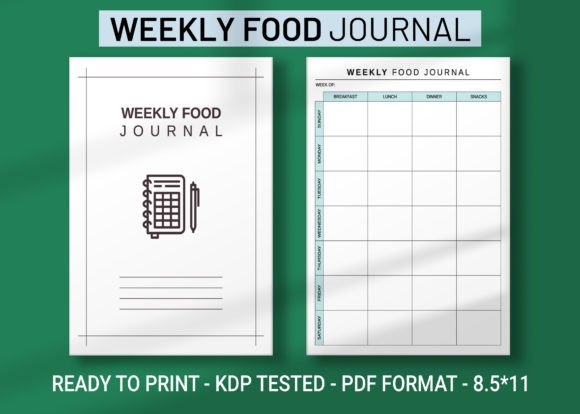
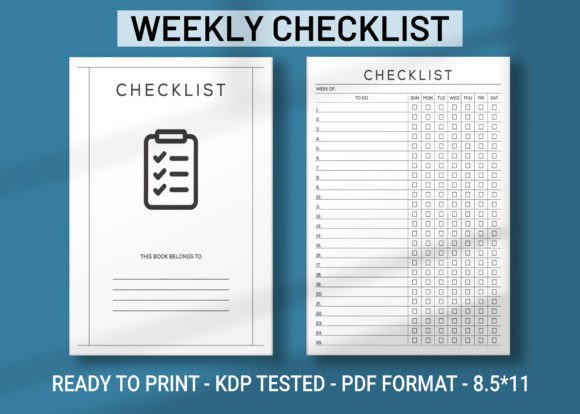
For projects like weekly planners, habit trackers, or progress journals—which the Weekly Checklist theme suggests—this interior provides more than just pages. It provides a logical visual structure. Checkboxes, weekly divisions, and consistent layouts are already in place, allowing you to concentrate solely on the content that makes your checklist unique.
Practical Benefits Beyond the Time Saved
The benefits are tangible. First is cost-effectiveness. Hiring a graphic designer to create a custom 120-page interior can be expensive. This digital product offers a professional result at a fraction of the cost. Second is speed to market. You can move from idea to published book much faster. Third is confidence. Knowing your interior meets professional print standards allows you to present your work with pride, crucial for building your author brand.
There is also the benefit of consistency. If you plan to create a series of checklists or related books, using the same Weekly Checklist KDP Interior as a foundation ensures a cohesive look across your entire product line, making your offerings instantly recognizable to your audience.
Important Considerations Before You Use It
While such a template is powerful, successful use depends on a few key factors. Always match the template to your content. A weekly checklist interior is ideal for, well, weekly content. Using it for a novel or a dense textbook would require massive adaptation and might not be suitable. Consider your book's purpose first.
Even with an editable AI file, some basic design awareness is helpful. You'll need to know how to input your text, choose complementary fonts, and maintain balance. If you only use the provided PDF, you must ensure your content fits precisely within the 120 pages provided, or understand how to add or remove pages correctly.
Finally, always order a physical proof. Even though the interior is "KDP tested," your specific text placement and final file should be verified with a real printed copy from Amazon before you hit "publish for sale." This is a non-negotiable step in professional self-publishing.
A Scenario: Bringing a Planner to Life
Imagine you are a life coach creating a "52-Weeks to Mindfulness" planner. You have the weekly prompts and exercises written. By using the Weekly Checklist KDP Interior, you immediately have a 120-page book with a dedicated intro page and a clean, weekly layout. You insert your text into the AI file, perhaps changing the color scheme to softer tones. Within a day, you have a high-resolution PDF ready. Because the file includes bleed and is pre-tested, your KDP upload is smooth. Within a week, you have a proof in your hands, and a professional product is ready for your clients and audience. The template didn’t create your content, but it empowered you to deliver it in a market-ready format with astonishing speed.
The landscape of self-publishing is filled with opportunities, but also with technical complexities. Products like the Weekly Checklist KDP Interior democratize the process. They shift the publisher’s role from being a technician back to being a creator and entrepreneur. By providing the ready-made digital files that make it easy to create your books, they remove a major barrier, allowing more ideas to find their way into print and more authors to share their work with the world.