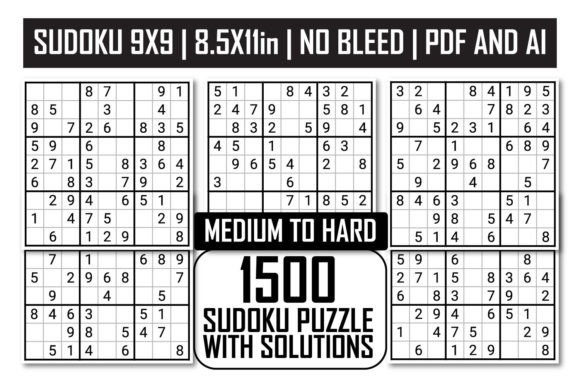
Elevating Your Mental Workflow with Sudoku Medium to Hard Puzzles
For many adults, maintaining a sharp and focused mind is a crucial component of their daily workflow. Whether navigating complex business strategies, managing creative projects, or simply seeking a structured break from digital overload, a disciplined mental exercise can be a powerful tool. Sudoku puzzles, particularly those of Medium to Hard difficulty, offer more than just a pastime; they provide a systematic process for enhancing logical thinking, pattern recognition, and problem-solving stamina.
Understanding Sudoku Medium to Hard in a Cognitive Process
Sudoku Medium to Hard represents a specific tier within the classic number-placement puzzle. Moving beyond introductory levels, these puzzles demand a more nuanced approach. Solvers must engage deeper logical techniques—such as scanning, marking, and employing strategies like “X-Wing” or “Swordfish”—to deduce the correct placements. This shift mirrors the transition in any professional or personal project from straightforward tasks to more complex, interdependent problems requiring sustained analysis and strategic elimination.
Engaging with Sudoku Medium to Hard is not an isolated event; it fits into a broader cognitive maintenance routine. Just as a professional might block time for strategic planning or an artist might schedule regular sketching sessions to hone their craft, dedicating time to these puzzles is a form of mental training. It strengthens the neural pathways associated with focus and systematic deduction, skills directly transferable to tasks like data analysis, coding, budgeting, or learning a new complex system.
Integrating Puzzles into Your Daily Routine and Workflow
The practical integration of Sudoku Medium to Hard puzzles into a busy schedule hinges on viewing them as a tool for cognitive reset or warm-up. Consider their use at different phases of your day. Many find that tackling a medium-level puzzle in the morning acts as a mental “warm-up,” sharpening focus before diving into work emails or complex tasks. Conversely, a harder puzzle in the evening can serve as a structured unwind, replacing passive screen time with active, calming concentration that helps compartmentalize the day’s stresses.
Their utility extends into project workflows as well. During phases of problem-solving or creative blockage, a short, disciplined puzzle session can act as a lateral thinking exercise. The process of methodically eliminating possibilities and finding a single correct solution can reframe your approach to a work problem, encouraging a step-by-step, evidence-based methodology. It’s a tool for practicing patience and persistence within a confined, solvable framework.
Preparing Your Puzzle Resources for Consistent Use
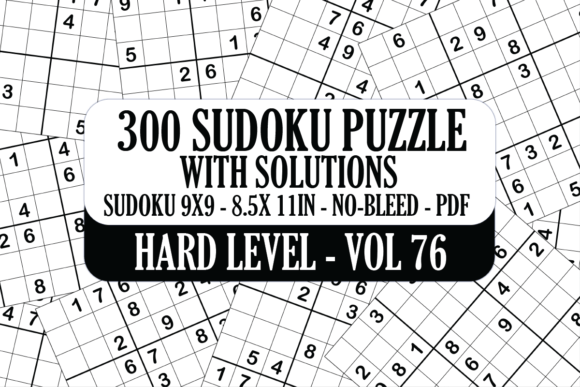
Long-term integration requires reliable, organized resources. A curated collection, such as a volume offering 1500 Sudoku Medium to Hard puzzles with solutions, becomes an asset. The key factors for seamless use are quality control and organization. Puzzles should be consistently graded to ensure a smooth progression from medium to hard, avoiding frustrating jumps in difficulty that disrupt the routine. Solutions provided separately, perhaps on adjacent pages or in a dedicated section, allow for efficient verification without cluttering the problem-solving space.
For the creator or publisher, this translates to careful preparation of the interior files. Having the puzzles and solutions neatly formatted—for example, 8 puzzles per page followed by 8 solutions per page on a standard 8.5”x11” layout—ensures usability and efficiency. Whether using the PDF for direct printing or the AI files for potential customization, the design should prioritize clear readability and a logical flow. No bleed means the content is self-contained, ready for clean printing or digital viewing, making it a professional-grade resource for personal use or even for educators incorporating logic training into their curriculum.
Practical Implementation and Workflow Examples
Let’s consider a few concrete scenarios. A marketing professional facing a day of analyzing campaign metrics might start with a 15-minute session on a medium Sudoku. This preps the mind for spotting patterns in data. A freelancer between client projects could use a harder puzzle as a boundary-setting activity, clearly marking a break while keeping their mind engaged. An educator might incorporate these puzzles into a lesson plan on logical reasoning, using the provided solutions as a teaching aid to explain deduction steps.
The interaction with other tools is minimal but significant. A physical puzzle book offers a tactile, screen-free experience, complementing digital productivity tools. It can sit alongside a planner, serving as a scheduled “brain training” appointment. For those who prefer digital, the PDF files can be loaded onto a tablet, making a puzzle session accessible during travel or while waiting, integrating with mobile workflows. The key is treating the session with the same intentionality as any other productive block.
Factors for Long-Term Cognitive Benefit and Quality
To derive sustained value, the consistency and progression offered by a large collection of puzzles are vital. With 1500 puzzles ranging from medium to hard, a user can establish a true practice regimen, gradually increasing difficulty as their skill improves. This mirrors skill development in any area: structured, incremental challenge leads to growth. The presence of solutions is not just for correction; it’s for learning. Reviewing a solution after a strenuous attempt on a hard puzzle is a form of quality control for your own reasoning process, highlighting gaps in your strategy.
From a usability perspective, a layout featuring 9x9 grids per page with eight puzzles per page optimizes space and clarity. It allows for easy navigation and reduces physical or digital page-turning fatigue, supporting an efficient workflow. The separation of puzzle pages and solution pages maintains a clean workspace, preventing accidental spoilers and fostering a focused problem-solving environment.
Smooth Integration into Professional and Personal Routines
Integrating Sudoku Medium to Hard puzzles smoothly requires viewing them as a defined component of your toolkit. Schedule them deliberately. Perhaps three puzzles per week: two medium, one hard. Keep the resource—the book or PDF—in your dedicated work or relaxation space. The goal is not to complete puzzles mindlessly, but to engage the process actively. Observe your own thinking patterns: where do you rush? Where do you get stuck? This meta-cognition translates directly to professional self-awareness, improving your approach to complex tasks.
For the entrepreneur or small business owner, whose work often blends creativity with rigid logistics, this kind of structured yet flexible mental exercise can build resilience. It trains the mind to hold multiple possibilities in tension while systematically seeking the one valid path—a skill directly analogous to business decision-making. It’s a low-cost, high-return practice for maintaining cognitive agility amidst a demanding workflow.
Ultimately, Sudoku Medium to Hard puzzles are more than a game. They are a process-oriented tool for mental discipline. By selecting a well-organized resource with a substantial volume of graded puzzles and clear solutions, you equip yourself with an asset for cognitive maintenance. Its integration into your daily or weekly routine can sharpen the very skills that underpin effective planning, analysis, and problem-solving in your professional and personal endeavors, providing a structured pause that reinforces the foundations of a focused mind.