The Zombie Employee Theme: A Practical ADHD Planner for Weekly Time Management
If you've ever felt like you're moving through your workweek in a fog—tasks blurring, deadlines looming, focus scattering—you might recognize the sensation. It’s what we call the "zombie employee" state: a cycle of reactive, unfocused work that drains energy and yields little satisfaction. For individuals with ADHD, this isn't just an occasional slump; it can be a default operating mode, especially without the right structural support. This is where a specialized tool like the ADHD Planner Weekly ADHD Time Management and Productivity Planner, specifically designed with the Zombie Employee Theme Pt2, becomes not just a notebook, but a strategic intervention.
Why a Theme Matters: Beyond Generic Productivity
Most planners are built on a assumption of linear, uninterrupted focus. They ask you to block time and list tasks, assuming your executive functions are running on autopilot. For an ADHD brain, this can feel alien and often fails. A themed planner, like this ADHD Planner with a Zombie Employee theme, works differently. The theme isn't mere decoration; it's a cognitive anchor. It names the struggle ("zombie mode") and provides a visual and conceptual framework to combat it. By personifying that state of autopilot overwhelm, it allows you to externalize the challenge and use the planner's pages as your "survival kit" against it.
Decoding the Weekly ADHD Time Management System
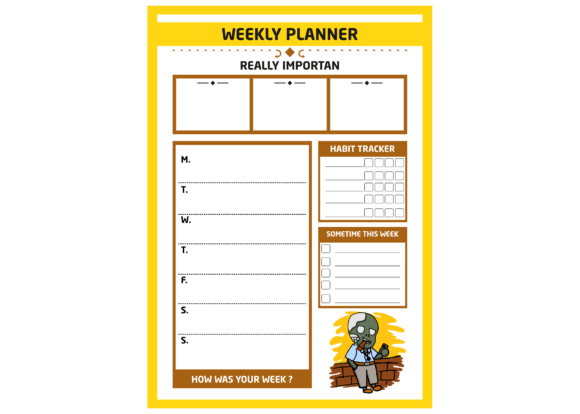
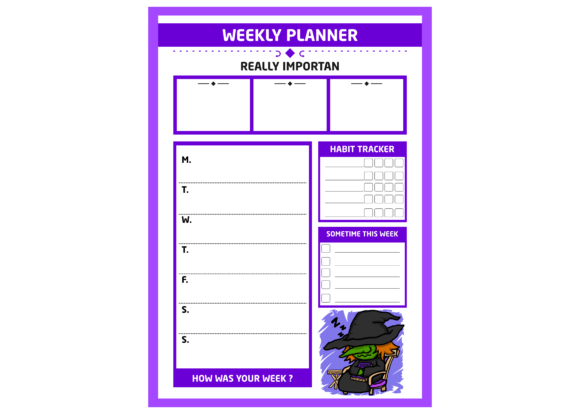
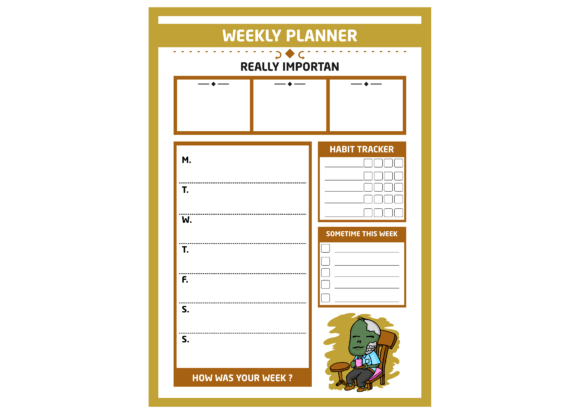
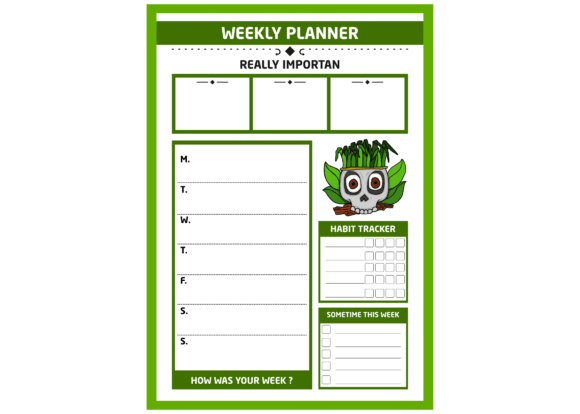
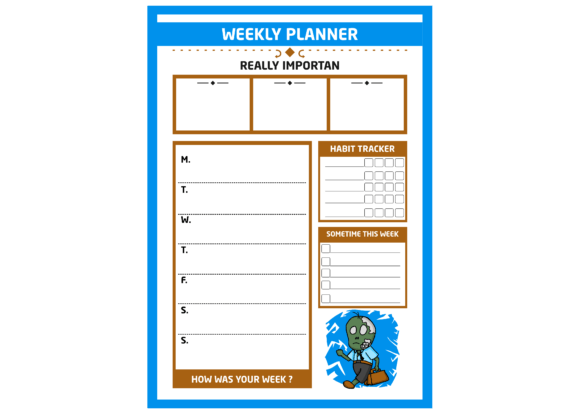
This planner in its A4 size (210 x 297 mm) provides ample space—a critical feature for those who need to see the whole picture without feeling cramped. The weekly layout is engineered for ADHD time management, which often requires a balance between macro-structure and micro-flexibility.
You’ll typically find sections dedicated not just to scheduling hours, but to:
- Energy & Focus Forecasting: Prompting you to predict, not just assume, your productive windows.
- Task Deconstruction: Breaking larger, anxiety-inducing projects into "bite-sized" actions (a perfect metaphor for the zombie theme).
- Interruptor Logs: Space to note what derailed you, transforming distractions into data for future planning.
- Win Capture: Mandatory sections to highlight what you did accomplish, countering the ADHD tendency to overlook successes.
This structure acknowledges that time management for ADHD isn't about filling every minute, but about navigating your attention and energy across the days.
The Practical Benefits of a Dedicated ADHD Planner
Moving from a generic app or notebook to a planner like the ADHD Planner - Zombie Employee Theme Pt2 offers tangible, daily advantages.
Externalizes Working Memory: The ADHD brain can be brilliant yet overloaded. Holding dates, tasks, and priorities internally is exhausting and prone to error. This planner acts as an external, trusted hard drive for those details, freeing mental RAM for actual work.
Reduces Activation Energy: Starting a task is often the biggest hurdle. A pre-structured page with clear, themed prompts lowers the "activation energy" needed to begin planning. You're not staring at a blank page; you're engaging with a designed system that asks specific, helpful questions.
Creates a Ritual of Review: Consistency is key, but rigid routines break easily. The themed layout encourages a daily and weekly review ritual that feels like a strategy session against "zombie mode," rather than a chore. This builds a sustainable habit loop.
Visualizes Progress Tangibly: In the Zombie Employee Theme, crossing off a task or filling in a "win" section isn't just a checkmark. It's a visual record of defeating the autopilot. Over a week, the filled pages become a concrete narrative of your focus and effort, combating the common feeling of "what did I even do this week?"
Fitting Into Modern Workflows: Digital vs. Analog
In a digital-dominated world, why choose a physical planner in PNG format (ideal for printing)? The answer lies in tactile engagement and reduction of digital distraction. Writing physically engages different neural pathways, aiding memory and commitment. Having a single, static A4 sheet on your desk provides a focal point without notifications, tabs, or the infinite scroll of a digital app. For many with ADHD, the very device meant to help (a computer or phone) is the source of the greatest distraction. This planner offers a clean, offline command center.
Moreover, the PNG format offers flexibility. You can print it as needed, bind it, or use it digitally on a tablet if you prefer stylus input. It adapts to your workflow without locking you into a specific platform.
Key Considerations Before Adopting the System
While the benefits are clear, success with any specialized tool requires a fit with your personal patterns. Here are factors to consider.
Commitment to the Ritual: The planner is a tool, not a magic solution. Its power comes from regular use. Assess if you can integrate a brief morning and evening review into your day. Often, the themed design makes this commitment easier because it feels more engaging.
Space for Adaptation: The best ADHD strategies are flexible. Does the planner’s layout, while structured, allow you to customize or ignore sections that don't serve you that week? A good ADHD planner should feel like a guide, not a rigid command.
The Theme's Resonance: Does the "Zombie Employee" concept resonate with you? If it accurately captures your experience of unfocused work, it will strengthen your engagement. If not, the underlying system still works, but the motivational "hook" of the theme might be less effective.
Printing and Physicality: Consider your access to easy A4 printing and your preference for physical materials. The A4 size is excellent for visibility but requires desk space.
Scenarios and Real-World Application
Imagine a project manager with ADHD facing a week of disparate meetings, administrative tasks, and a creative report. Using the ADHD Planner Weekly ADHD Time Management and Productivity Planner, they start Monday by forecasting: "Energy high in AM, crash post-3 PM." They deconstruct the report into three "bite-sized" 90-minute blocks across Tuesday and Wednesday mornings. The "Interruptor Log" helps them notice that unscheduled calls consistently break their flow, so they schedule a "call block" on Thursday. By Friday, the "Win Capture" section is filled with completed micro-tasks and the drafted report, providing a clear counter-narrative to the week's initial overwhelm.
In another scenario, a student uses the Zombie Employee Theme Pt2 planner to navigate a week of classes, study, and part-time work. The theme reminds them that passive, zombie-like studying is ineffective. The planner prompts them to schedule active study techniques (like practice tests) during their forecasted high-focus periods, turning a week of potential drift into a structured campaign.
The Role of Structure in Managing ADHD Attention
Ultimately, tools like this planner address a core ADHD challenge: the need for external structure to compensate for internal variability in attention and executive function. The weekly format provides a bounded container—a single week—which is a manageable timeframe for planning without becoming overwhelming.
The ADHD Planner with a Zombie Employee theme leverages that structure by infusing it with a relatable metaphor. It turns the planning process from a dry administrative task into a personalized strategy game. You're not just listing chores; you're allocating resources (your time and focus) to defeat a specific enemy (the zombie state of unproductive autopilot).
This shift in perspective is profound. It makes the planner something you want to use because it's aligned with your lived experience. The A4 size gives you the battlefield map. The weekly sections are your tactical units. And each completed task is a step toward reclaiming a focused, intentional, and alive work life—far from the trudging pace of the zombie employee.