Spells for Structure: How a Witch-Themed ADHD Planner Transforms Time Management
Managing time and maintaining productivity can feel like a magical challenge for individuals with ADHD. The unique cognitive patterns—the bursts of hyperfocus, the tendency for distraction, the need for external structure—require tools that are not just functional but engaging. Enter the ADHD Planner with a Witch Cartoon Theme, specifically the Weekly ADHD Time Management and Productivity Planner. This isn't just a notebook; it's a designed experience that blends practical organization with enchanting visuals to help you organize your time, improve focus, and finally get those important files in order.
Why a Theme Matters: Beyond Basic Productivity Tools
Traditional planners often assume a linear, disciplined approach to time. For many with ADHD, this can feel restrictive, uninspiring, and quickly leads to abandonment. The significance of a themed planner, like this witch cartoon design, lies in its ability to capture interest and sustain engagement. The theme acts as a cognitive anchor. Visual elements—characters, icons, spells, and magical artifacts—create a positive emotional connection. This makes the planner something you want to open, not just something you feel obligated to use. It transforms the act of planning from a chore into a ritual, aligning with the brain's need for novelty and stimulation.
This approach fits perfectly into modern life where customization and personalization are key. In education, work, or daily creative pursuits, tools that resonate personally are more effective. A student might see tracking homework as "completing quests," while a professional might view project milestones as "casting success spells." This reframing through a playful, coherent theme provides context and makes the abstract concrete.
Deciphering the Planner's Core Components: A Spellbook for Your Week
The planner, offered in practical A4 size (210 x 297 mm) in PNG and PDF formats, is designed for clarity and ease of use. Let's explore its purpose by breaking down its typical sections.
The Weekly Layout: Your Temporal Cauldron
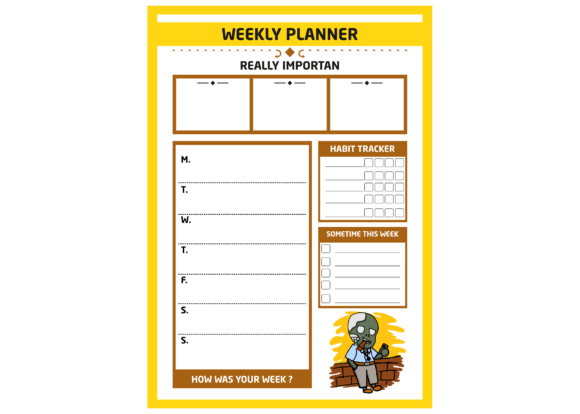
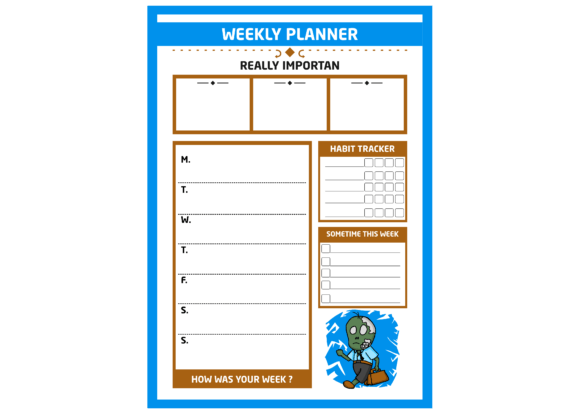
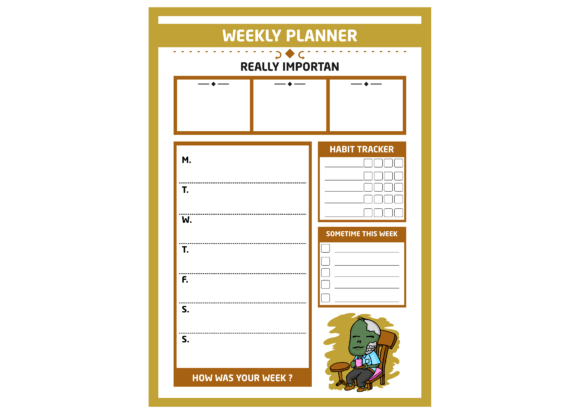
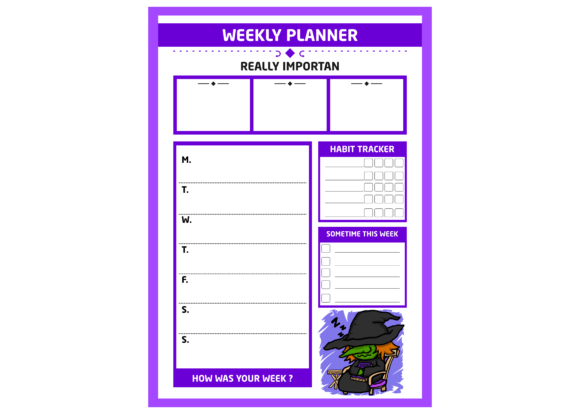
The heart of the planner is the weekly spread. Here, time is visualized not as a rigid grid but as spaces to be filled with intentions. Days are often clearly demarcated with themed borders or icons. The large A4 size provides ample room, combating the overwhelm of cramped spaces that can trigger anxiety. You can see your entire week at a glance—a crucial feature for managing ADHD's challenges with sequencing and foresight.
- Priority Incantations: A dedicated area for the 3-5 most important tasks for the week. This forces a beneficial filtering process, reducing the noise of an endless to-do list.
- Daily Time Blocks: Sections to assign specific activities to morning, afternoon, and evening. This external structure compensates for internal difficulties with time estimation.
- Focus Potion Tracking: Logs or checkboxes to monitor periods of sustained focus, turning an intangible experience into a visible achievement.
Specialized Sections for ADHD Challenges
This planner goes beyond generic scheduling. It addresses ADHD-specific needs directly.
- Distraction Ward Log: A space to note what pulled you away from tasks. Reviewing this helps identify patterns and develop personal "counter-spells" over time.
- Energy & Mood Charm Tracking: ADHD energy levels fluctuate. Charting them helps plan demanding tasks for high-energy windows and restorative activities for low-energy periods.
- Get Organized Files Section: A direct response to the common ADHD hurdle of digital or physical clutter. This includes checklists for file sorting, naming conventions, and cleanup sessions, making a daunting process step-by-step.
The Practical Relevance: From Paper to Real-Life Improvement
How does this themed planner translate into tangible benefits? Its practical relevance spans multiple domains.
In work and business, it serves as a visual project management aid. Breaking down a complex project into weekly "spell components" makes it manageable. The act of writing in the planner also creates a physical record, aiding memory and providing a reference point during meetings or reviews.
For education and creativity, the planner encourages breaking large assignments or artistic endeavors into weekly milestones. The witch theme can inspire creative thinking—a story outline becomes "plot potion ingredients," a research paper becomes "ancient knowledge gathering." This links logical planning to imaginative right-brain activity.
In daily activities, it becomes a central hub. Medication reminders, appointment times, household chores, and social plans all coexist in one themed, engaging space. This reduces the cognitive load of juggling multiple reminders across different apps or scraps of paper.
Clarifying Common Misunderstandings
Some might assume a cartoon-themed tool is frivolous or only for children. This is a significant misunderstanding. The theme is a delivery mechanism for serious cognitive support. The underlying structure is based on well-understood ADHD management principles: externalization of time, chunking of tasks, and regular self-monitoring. The whimsical presentation simply increases adherence to these principles.
Another assumption is that digital tools are inherently better. For many with ADHD, however, physical planners offer distinct advantages. The tactile experience of writing engages the brain differently, can be less prone to triggering side-tracks (like unrelated internet browsing), and the A4 size provides a permanent, uncluttered canvas that doesn't disappear behind notifications.
Building a Broader Understanding: The Planner as Part of a System
The Witch Cartoon Theme ADHD Planner is most effective when viewed not as a magic bullet, but as a core component of a broader organizational system. It fits into a modern approach to ADHD management that combines technology, psychology, and design.
For example, the "Get Organized Files" section in the planner can be used to plan a digital cleanup. You then execute that plan on your computer, using cloud storage or specific software. The planner provides the intention and roadmap; technology provides the execution environment. Similarly, the mood and energy tracking can inform conversations with a therapist or coach, providing concrete data to discuss strategies.
Ultimately, this planner's significance is in its human-centered design. It acknowledges that managing ADHD requires tools that respect the user's neurology, interests, and need for encouragement. By making structure enchanting, it empowers individuals to build the consistency they seek, one weekly spell at a time. Whether printed in high-quality PNG for digital annotation or as a PDF for physical binding, this A4 spellbook offers a unique path to transforming chaos into order, and intention into action.