The Medication Log: Your Blueprint for Organized Health Management
For anyone managing a medication regimen—whether for themselves or a loved one—organization is not just a convenience; it's a cornerstone of effective care. A Medication Log transcends being a simple notepad. It is a structured, dedicated system for tracking doses, times, side effects, and refills, transforming a potentially chaotic routine into a clear, accountable process. This tool is interesting precisely because it addresses a universal need for clarity in health management, blending practical necessity with the potential for personalized design.
Beyond Basic Tracking: Creative Applications of the Log Framework
The core concept of a Medication Log is powerful, but its application can be creatively adapted to serve diverse needs and styles. It’s more than a chart; it's a customizable health companion.
Consider the visual communicator. They might use color-coded sections for different types of medications (e.g., blue for daily maintenance, yellow for occasional use), or incorporate iconography to denote time of day—a sun for morning, a moon for evening. This turns the log into an intuitive, quick-reference guide that reduces cognitive load.
For the data-driven individual, the log can expand into a broader health journal. Adjacent columns could track related metrics like blood pressure, glucose levels, or mood, creating a holistic picture of how medication interacts with overall well-being. This approach provides invaluable data for discussions with healthcare providers.
Caregivers, especially those managing complex schedules for multiple people, can adapt the log into a central command dashboard. A single log could have dedicated pages for each family member, or a weekly overview grid that ensures no dose is missed across different households. This application turns a personal tool into a family health management system.
Tailoring the Design for Specific Audiences and Formats
The utility of a Medication Log is multiplied when its design consciously considers its end user. A log designed for young adults managing a new prescription might prioritize simplicity and motivational cues—clean layouts with gentle reminders. A log for older adults could feature larger, high-contrast fonts and extremely clear, unambiguous time slots.
Digital integration offers another layer of adaptation. While a printed log offers tangible, offline reliability, the structure can inspire digital templates. Creators might develop printable PDFs for those who prefer paper, or design the log as a foundation for a digital app interface, focusing on user experience flow that mimics the clear sections of the physical version.
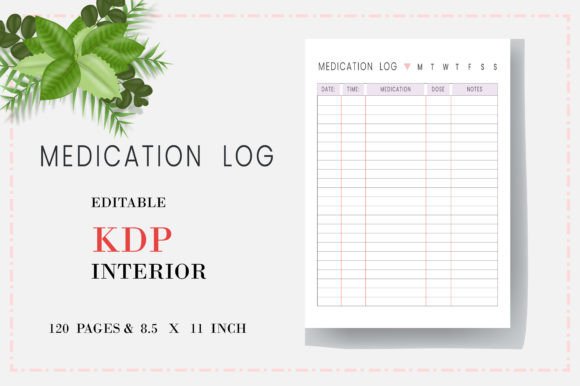
For entrepreneurs and publishers, such as KDP sellers, this adaptability is key. The provided high-resolution, editable files for a Medication Log interior are not just a product; they are a starting point. You can modify colors, fonts, and layout to create niche-specific logs—for example, a serene, minimalist log for mental health medications, or a vibrant, energetic design for a pediatric vitamin regimen. The editable Illustrator AI file allows you to own the design process completely, ensuring the final product feels original and targeted.
Practical Inspiration for Implementation
How do you move from a generic template to a log that feels personal and effective? Start by identifying the single biggest pain point in the current tracking method. Is it forgetting afternoon doses? Confusion between similar pills? Then, design a section of the log to solve that problem with emphasis.
For instance, if "time confusion" is the issue, a dedicated daily timeline bar, visually broken into AM, PM, and Night, can be more effective than a simple checklist. Include a column for "Notes/Observations" that encourages the user to jot down brief effects, like "felt drowsy after lunchtime dose." This small habit transforms the log from a passive record into an active health dialogue.
Consistency in layout is crucial for usability. Whether you're designing for yourself or for a market, ensure that the days of the week, medication names, and time columns are always in the same position. This predictability reduces the learning curve and makes the log genuinely helpful rather than a new source of confusion.
A Foundation for Reliability and Creative Expression
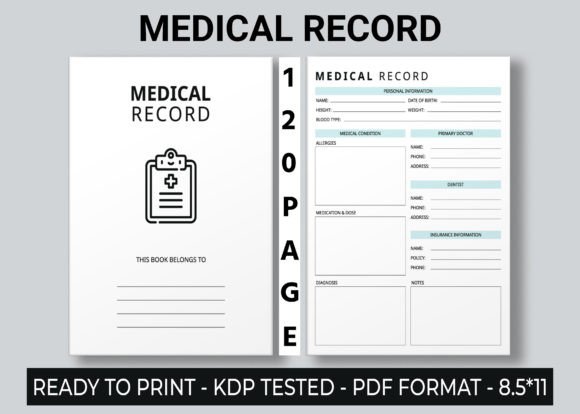
Ultimately, a well-designed Medication Log serves two masterful purposes. First, it establishes reliable oversight, a non-negotiable benefit for health safety. Second, it provides a canvas for useful creativity. The 120-page, letter-size design, ready for high-resolution print, offers ample space not just for repetition, but for evolution. You can have standardized tracking pages for most of the journal, and include specialized pages at intervals—perhaps a monthly summary page, or a contact sheet for pharmacies and doctors.
For the KDP seller or content creator, this represents a tangible product opportunity that meets a real need. By appreciating the core function—organization—and then exploring creative variations in audience targeting, visual style, and supplemental features, you can develop interior files that are truly game-changing. They offer the end user not just a tool, but a tailored experience that supports their health journey with clarity and dignity. It’s a project where practical guidance and inspired design intersect perfectly.
Whether you are adapting the editable file for a specific community or using the print-ready PDF for your own managed care, the principle remains: structure liberates. A clear Medication Log frees the mind from the anxiety of forgetfulness and allows energy to be focused on living well. It is a simple idea, made powerful through thoughtful, adaptable design.