The Ultimate Guide to Organizing Your Taxes: Introducing the Tax Checklist Notebook Logbook
Tax season often arrives with a sense of dread, accompanied by a scramble for receipts, forms, and notes scattered across desks and digital folders. For individuals, freelancers, and small business owners, the process can feel overwhelmingly chaotic. This is where the concept of a dedicated Tax Checklist Notebook Logbook transforms from a simple idea into a powerful organizational tool. It’s more than just a notebook; it’s a structured, year-long companion designed to capture every financial detail you'll need, turning tax preparation from a frantic hunt into a streamlined process.
What Exactly Is a Tax Checklist Notebook Logbook?
A Tax Checklist Notebook Logbook is a purpose-built interior template, typically available as a ready-to-use PDF download, crafted specifically for tracking tax-related information. Unlike a generic journal, it incorporates structured sections, checklists, and log pages that guide you through documenting income, expenses, deductions, and important deadlines. The design focuses on functionality, providing a single, physical repository for all the pieces of your financial puzzle. The immediate value lies in its pre-organized format—you don’t have to create the system yourself; you simply fill it in.
Core Features and Design Characteristics
When you acquire a professionally designed Tax Checklist Notebook Logbook KDP Interior, you’re getting a tested template built for practicality. Common features include:
- Dedicated Introduction Page: Sets the stage for how to use the logbook effectively.
- Comprehensive Checklist Sections: Step-by-step lists for common income sources, deductible expenses, and documents to gather.
- Monthly or Quarterly Log Pages: Space to regularly record transactions, mileage, home office costs, or client payments.
- Important Date Trackers: Reminders for quarterly estimated payments, filing deadlines, and submission dates.
- Note Pages for Irregular Items: Flexible space for one-off events like asset purchases or charitable contributions.
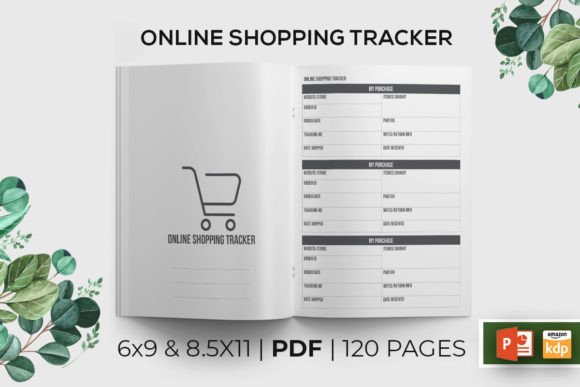
- Standard Print-Ready Sizes: Typically formatted for popular dimensions like 6" x 9" or 8.5" x 11", ensuring compatibility with personal printing or professional publishing platforms like Amazon KDP.
- Total Page Count: Often around 120 pages, offering ample space for a full year of tracking without being bulky.
The design is usually tested on Amazon Kindle Direct Publishing (KDP) to guarantee the PDF renders perfectly when uploaded, with clean margins and a professional look. This attention to detail means the template is truly ready to use, whether for personal printing or for creators looking to publish a physical product.
The Real-World Value: Who Benefits and How?
The utility of a Tax Checklist Notebook Logbook spans a wide range of financial situations. Its primary benefit is creating consistency and reducing the risk of overlooking critical information.
Scenario 1: The Freelancer or Independent Contractor
Imagine a graphic designer working with multiple clients. Income is irregular, expenses range from software subscriptions to coffee meetings, and deductible home office costs are a must. Using the logbook, they can log each client payment as it arrives, categorize expenses by project, and track mileage for client visits every month. Come January, they have a fully documented year instead of a pile of disorganized bank statements.
Scenario 2: The Small Business Owner
A small retail owner has more complex needs: inventory purchases, employee-related expenses, utility bills, and potential equipment deductions. The checklist sections in the Tax Checklist Notebook Logbook prompt them to consider each category, while the log pages provide a simple method for their bookkeeper or themselves to enter data weekly, ensuring nothing slips through the cracks.
Scenario 3: The Investment or Property Holder
For someone with rental property or a portfolio of investments, tracking is paramount. They can use the notebook to record rental income per property, log maintenance and repair expenses immediately after they occur, and note dividend payments or capital gains details throughout the year. This continuous logging provides a clear paper trail that supports accurate reporting and can be invaluable if questions arise.
Even for an individual with a straightforward W-2 job but some side hustle income or significant charitable giving, the logbook serves as a centralized place to collect those often-forgotten items that can lead to valuable deductions.
Evaluating Its Suitability for Your Needs
A Tax Checklist Notebook Logbook is a powerful tool, but its effectiveness depends on your habits and needs. Consider these points to decide if it’s right for you.
Strengths and Advantages
- Reduces Stress and Last-Minute Panic: By logging information routinely, the annual tax scramble is eliminated.
- Improves Accuracy: Having a dedicated place for data reduces errors from misplaced receipts or forgotten transactions.
- Saves Time: Compiling information from a single notebook is drastically faster than from multiple sources.
- Encourages Financial Awareness: Regular logging makes you more conscious of your income and spending patterns year-round.
- Physical vs. Digital Benefit: For many, writing things down physically creates a more reliable and tangible record than scattered digital files.
Practical Considerations and Limitations
It’s important to set realistic expectations. The logbook is a tracking tool, not an automated accounting software. You must commit to the habit of updating it regularly—weekly or monthly entries are ideal. If your financial life is extremely complex with hundreds of transactions monthly, you may still need dedicated software, but the logbook can serve as a superb supplemental master checklist and tracker for major items. Also, while the interior is designed for clarity, you are responsible for printing it or having it published as a physical book, which involves an additional step.
Guidance on Implementation and Use
To maximize the value of your Tax Checklist Notebook Logbook, treat it as a working document. Start it at the beginning of your fiscal year. Keep it in a place you frequent—perhaps with your daily planner or on your desk. Use the checklists at the start of each quarter to remind yourself of what to look for. Don’t worry about perfection; the goal is consistent capture. Even incomplete notes are better than no notes at all. When a receipt is obtained, jot down the amount and category in the logbook immediately, then staple the receipt to the page or file it in a corresponding folder. This creates a direct link between your log and your proof.
A Tool for Organization, Not Just for Tax Season
Ultimately, the Tax Checklist Notebook Logbook represents a shift in approach. It moves tax preparation from an annual reactive event to a proactive, year-long process. Its design, tested for clarity and ready for immediate use, removes the barrier of having to design your own system. For the general consumer seeking peace of mind, the professional aiming for accuracy, or the creator looking to offer a helpful product, this structured logbook provides a simple yet profoundly effective framework for financial order. By centralizing your critical data, it turns the overwhelming task of tax organization into a manageable, even routine, part of your financial life.