Fundamental Skills for Visual Development
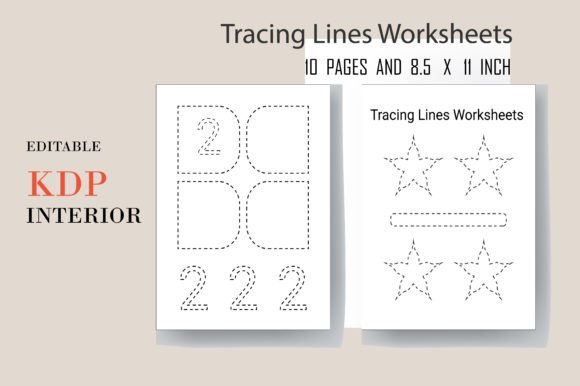
Sometimes the most powerful design solutions emerge from practicing the simplest foundational forms, a principle perfectly embodied by using Tracing Lines Worksheets as a creative warm-up.
From a professional graphic design perspective, mastering control and consistency in line work is not just about penmanship; it's the bedrock of intentional visual communication. These worksheets offer a structured, repeatable method to refine the motor skills and precision necessary for crafting clean vector paths in logo design, defining sharp edges in UI design, or establishing confident strokes in custom typography.
The Role of Precision in Creative Workflows
In modern visual design, every line carries meaning. A shaky or inconsistent stroke can undermine the perceived quality of a brand identity, while a confident, smooth line conveys professionalism and clarity. Integrating tracing exercises into your routine, or that of your team, builds the muscle memory for digital illustration and layout composition, directly impacting the polish of final creative assets.
This practice translates seamlessly into numerous applications:
- Branding & Logo Design: Creating symmetrical, balanced icons and logotypes requires precise control.
- Editorial & Web Design: Consistent line weights establish clear visual hierarchy in layouts.
- Packaging & Print Design: Defining clean contours and borders ensures a premium presentation.
Practical Applications Beyond Practice Sheets
While the worksheets themselves are tools for skill development, the core concept—practiced precision—influences every stage of a design project. Consider how a refined ability to trace and create clean shapes improves your workflow when working with an editable source file, like an AI vector format. It allows for scalable, adaptable assets that maintain integrity across social media graphics, advertising campaigns, and merchandise.
The dimensions of 8.5" x 11" mirror a standard canvas, familiarizing designers with a common workspace for everything from digital product mockups to presentation slides. This familiarity breeds efficiency, allowing you to focus on higher-level creative decisions like color palette integration and modern aesthetics rather than struggling with basic form.
Evaluating Design Elements for Impact
Quality in visual design is often judged by its consistency and readability. Tracing exercises inherently teach these values. When selecting or creating core design elements for a project, ask yourself: Are the lines and shapes scalable? Do they contribute to a coherent visual hierarchy? Do they align with audience expectations for your brand identity?
A strong foundation in line work ensures that your typography is legible, your icons are recognizable at any size, and your overall composition feels intentional. This technical skill supports the artistic vision, enabling complex creative projects to feel unified and professional.
Ultimately, the journey from a simple tracing exercise to a stunning finished design is about connecting discipline with creativity. Investing time in these fundamental practices doesn't just improve penmanship; it elevates the entire design process, resulting in communications that are not only visually compelling but structurally sound. The right creative assets, born from practiced skill, become the reliable tools that increase the effectiveness of every visual message you craft.